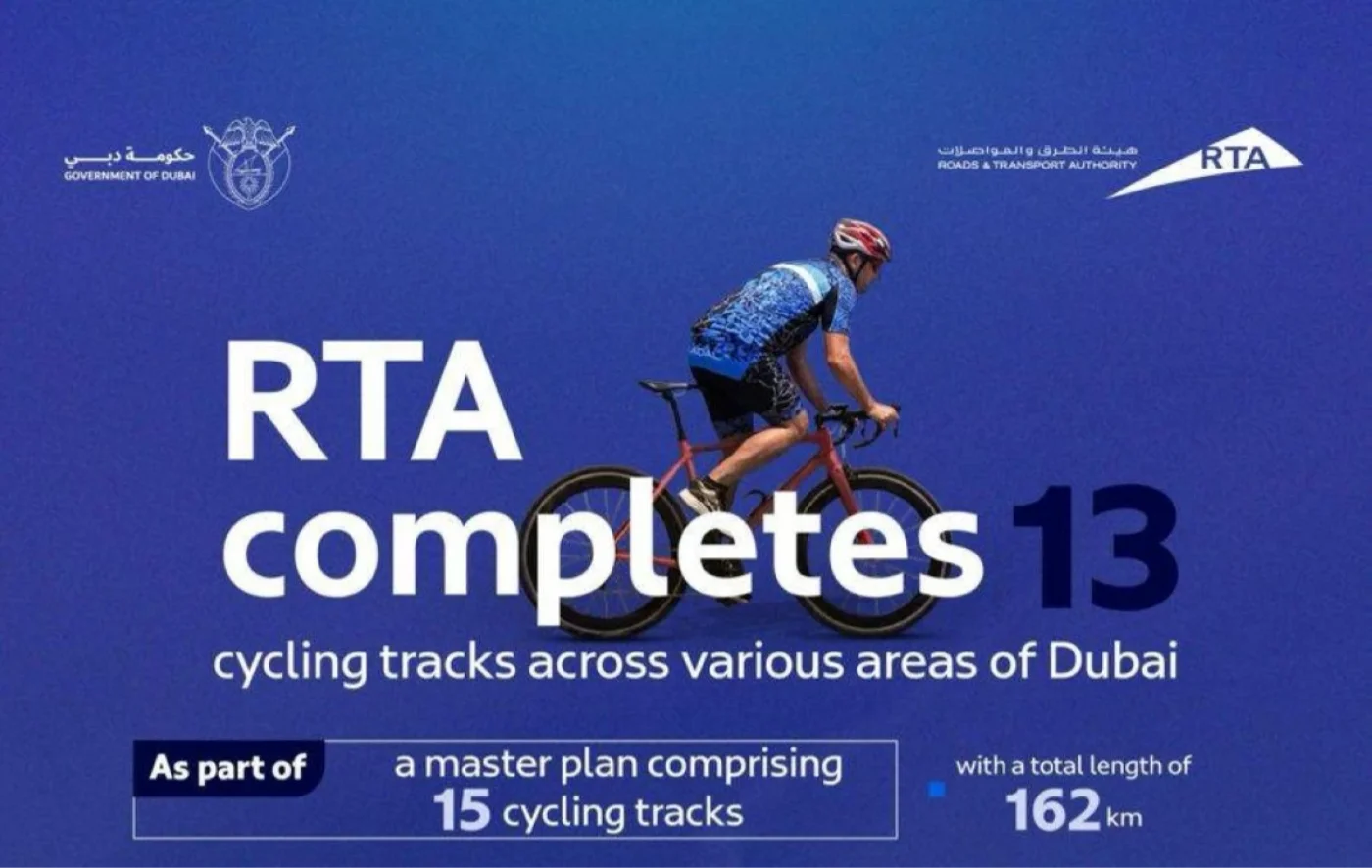
Dubai has taken a major step toward becoming a more sustainable and cyclist-friendly city, with the Roads and Transport Authority (RTA) completing 13 new cycling tracks as part of a broader infrastructure expansion across the emirate.
The development forms part of a larger master plan that includes 15 cycling routes spanning a total of 162 kilometres, aimed at improving mobility and promoting environmentally friendly transport options.
Integrated Network Connecting Key Areas
The newly completed tracks are designed to create an integrated network connecting residential communities with key commercial, leisure, and tourism destinations across Dubai. Major routes include connections:
- From Al Khawaneej to Al Mamzar Beach
- From Al Warqa’a to Saih Al Salam
- From Dubai International Financial Centre (DIFC) to Jumeirah
Officials say the network is intended to support first- and last-mile connectivity, making it easier for residents and visitors to combine cycling with public transport options.
The project also includes targeted improvements around key public transport hubs such as BurJuman, Baniyas, and Burj Khalifa/Dubai Mall stations, enhancing accessibility for commuters.
Part of Dubai’s 1,000km Cycling Vision
The expansion is aligned with Dubai’s long-term goal to build a 1,000-kilometre cycling network by 2030, positioning the city as a global leader in sustainable urban mobility.
Authorities highlighted that the project reflects a broader vision to create a pedestrian- and cyclist-friendly city, improving quality of life while reducing dependence on cars.
Dubai’s efforts are already gaining international recognition. The city has been ranked among the world’s top 100 cycling-friendly cities in the Copenhagenize Index, making it the first city in the Middle East to achieve this distinction.
Rising Demand for Cycling in Dubai
The expansion comes as cycling activity continues to grow rapidly in the emirate. Recent data shows:
- Cycling trips increased from 46.6 million in 2024 to 57.3 million in 2025
- The total cycling track network expanded from 560 km to 636 km
- Around 22% of Dubai’s population now has access to cycling infrastructure
Officials also reported that cyclist satisfaction has reached 85%, reflecting strong public response to improved infrastructure.
New Tracks Across Key Neighborhoods
The completed projects include cycling tracks in several areas, such as:
- Al Khawaneej 2 and Al Barsha 2, covering 18.5 km
- A 700-metre track in Tolerance District
- Tracks developed under the Soft Mobility Project in areas like Al Souk Al Kabeer, Hor Al Anz, and Abu Hail
In addition, dedicated tracks for bicycles and e-scooters have been introduced, along with improved pedestrian pathways and safer internal road designs.
Bridges and Future Developments
To further enhance connectivity, RTA is also developing a series of pedestrian and cycling bridges across major roads, including:
- Sheikh Mohammed bin Zayed Road
- Dubai–Al Ain Road
- Sheikh Zayed Road
- Al Khail Road
These bridges will connect existing cycling routes and improve access between residential areas and major destinations, including shopping malls and business districts.
Most of the new infrastructure is expected to become fully operational during the second quarter of 2026, further strengthening Dubai’s cycling ecosystem.
Boost for Tourism and Lifestyle
The expansion is expected to benefit not only residents but also tourists, offering new ways to explore the city beyond traditional transport options. Cycling routes connecting beaches, urban districts, and leisure destinations are likely to enhance Dubai’s appeal as an active lifestyle destination.
Tourism experts note that improved cycling infrastructure aligns with global travel trends, where visitors increasingly seek sustainable and experiential activities.
Final Takeaway
With the completion of 13 new cycling tracks and a 162km network expansion, Dubai is moving closer to its vision of becoming a world-class cycling destination. The initiative reflects the emirate’s commitment to sustainable mobility, improved connectivity, and enhanced quality of life for residents and visitors alike.
As further developments continue toward the 2030 target, Dubai’s cycling infrastructure is set to play an increasingly important role in shaping the future of urban transport and tourism in the city.